The Red Book, Decoded: A Calm Guide to Centiles, Reviews and Health Visitor Notes
Photo: Sanromá, John B., 1900-1997, Public domain, via Wikimedia Commons
Your baby's red book, the Personal Child Health Record, is probably the most handled document in your house right now. It lives in the changing bag, gets sat on, and comes out at every appointment. Because it is full of lines, numbers and abbreviations, it is easy to flick through it and feel like you are being graded.
You are not. Here is what is actually going on in those pages, which bits deserve a second look, and which bits you can cheerfully stop worrying about.
First things first: it is a record, not a report card
The red book is a parent-held record. You keep it. Health visitors, GPs, midwives and hospital staff write in it, but it belongs to you and your child. Some NHS trusts now offer digital versions alongside it, but the paper book is still the thing you will be asked for at appointments, so keep it somewhere you can find it in a hurry. A photo of the front page and the latest growth pages on your phone is a genuinely useful backup.
It is not a test you can fail. Nobody is scoring your parenting in there. The notes exist so that any professional you see, even one who has never met you before, can get a quick picture of your baby's history.
Growth charts: centiles are patterns, not grades
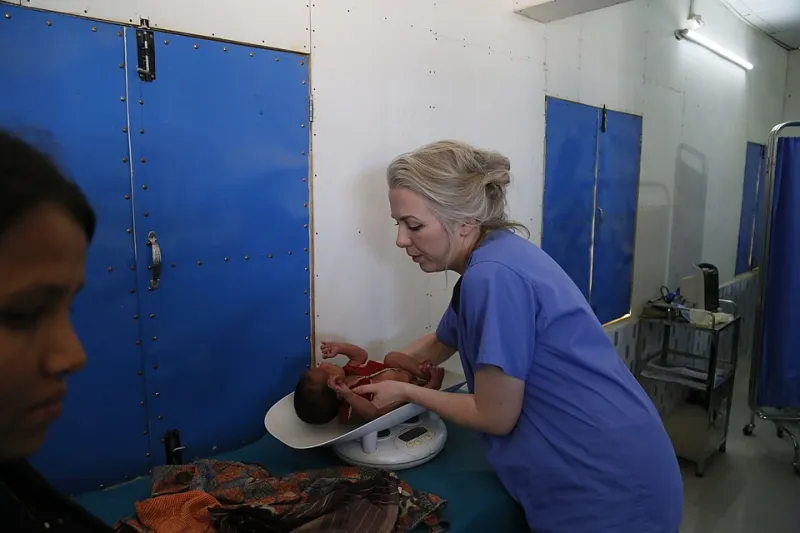
Those curved lines are the UK-WHO growth charts. They show how your baby's weight, length and head circumference compare with other babies of the same age and sex. A centile is not a mark out of ten. A baby on the 9th centile who is steadily following that line is doing just as well as a baby on the 91st centile following theirs.
What matters is the direction of travel, not the number. Babies often shuffle between centiles in the early weeks, especially breastfed babies, and a one-off measurement that looks a bit different is very rarely anything to worry about. Different scales, a full nappy, a recent feed or a bout of illness can all nudge a single reading.
A shift of two or more centile spaces across several measurements, or a baby who keeps sliding downwards over time, is the kind of thing worth flagging at your next contact. Not because something is definitely wrong, but because it is the pattern a health visitor would want to look at alongside how your baby is feeding, weeing and generally behaving.
The developmental reviews, demystified
There are a few set-piece checks in the first couple of years. The newborn physical examination happens shortly after birth and looks at hips, heart, eyes and, for boys, testes. The six to eight week check with your GP covers similar ground plus a general once-over. Around nine to twelve months there is usually a review looking at hearing, vision, movement and early communication. Then, at two to two and a half, there is the developmental review, which often includes a questionnaire about how your child is moving, talking, playing and coping with daily life.
These are conversations with a bit of measuring, not exams. If something is flagged, it is usually a let us keep an eye on that, or a referral to be thorough. Very often the next review shows things have evened out.
The immunisation pages and the scary-looking stamps
The vaccination section records what your baby has had and when, including batch numbers. It can look busy and official, but there is nothing ominous in there. If you have missed a jab, babies can catch up, and your GP surgery can advise on the schedule. You do not need to memorise any of it; the book does that for you.
What the health visitor actually means by their notes
Health visitors write in shorthand that can read like code. Phrases like thriving, parental concern noted, or review advised are not secret warnings. They are prompts for the next professional. If a note worries you, ask them to read it back to you and explain it in plain English. You are allowed to do that. You are also allowed to ask for a copy of any letter that has been sent about your child.
Things you can genuinely stop worrying about
- The book looking scruffy. A smudged, well-travelled red book is a sign it is being used.
- A single measurement that moved a line. One reading is a snapshot, not a trend.
- Your baby being on a low centile. Low is not the same as failing.
- Comparing your baby to a friend's baby. Different babies, different charts, different genetics.
- Missing the occasional weigh-in. Weighing is a tool, not a ritual, and frequent weighing can create more anxiety than it solves.
- Not filling in the parent section perfectly. It is there if you find it useful, not as homework.
When a chat is genuinely worth having
Trust your instincts. If your baby is feeding differently, has fewer wet nappies, seems unusually sleepy or floppy, or you simply cannot shake the feeling that something is off, ring your health visitor team or GP. Persistent downward centile crossing, especially alongside any of those signs, is a good reason to pick up the phone. You will not be seen as a nuisance.
How to use the book with confidence
Take it to every appointment. Write your questions on the notes pages before you go, because it is amazing how they vanish from your head the moment someone asks if you have any concerns. Ask for explanations when something is not clear. And remember that the red book is a tool for continuity of care, not a running commentary on how well you are doing. You are doing fine.