Feeding Guilt, Weighed Nappies and the Truth About ‘Enough’: A Health Visitor’s Calm Take
Photo: Follower of Jean-Baptiste-Siméon Chardin, CC BY-SA 4.0, via Wikimedia Commons
I have spent years sitting on parents' sofas as a health visitor, and I have lost count of the number of times someone has whispered, ‘I am not sure I am making enough.’ It is usually said quietly, as if admitting it makes them a failure. It does not. It makes them a parent who is paying attention.
This is not a breastfeeding versus formula piece. It is not a smug piece about ‘just relax’. It is a guilt-reduction piece. Because the feeding worry is rarely just about millilitres. It is about sleep deprivation, conflicting advice, strange scales and the feeling that everyone else has cracked it while you are googling at midnight.
‘Enough’ is a pattern, not a feeling
The first thing to say is that ‘enough’ is not a vibe. It is a pattern. It is feeding, nappies, weight, alertness and your baby's overall way of being. One difficult evening does not break the pattern. One fussy feed does not mean your supply has vanished. One comment from a relative does not override your health visitor.
A baby who is feeding regularly, having wet nappies, waking for feeds and generally coming back to themselves is usually doing the ordinary baby thing. A baby who is very sleepy, hard to wake, feeding much less than usual or not producing wet nappies needs a proper look. That is not guilt. That is just checking.
Breastfeeding: cluster feeding is not a supply failure
Cluster feeding gets a terrible reputation. In the early weeks, babies often feed in long, frequent bursts, especially in the evening. It is exhausting, but it is also normal. It does not automatically mean your milk has dried up. It is often your baby doing exactly what babies do: growing, comforting and putting in an order for more milk.
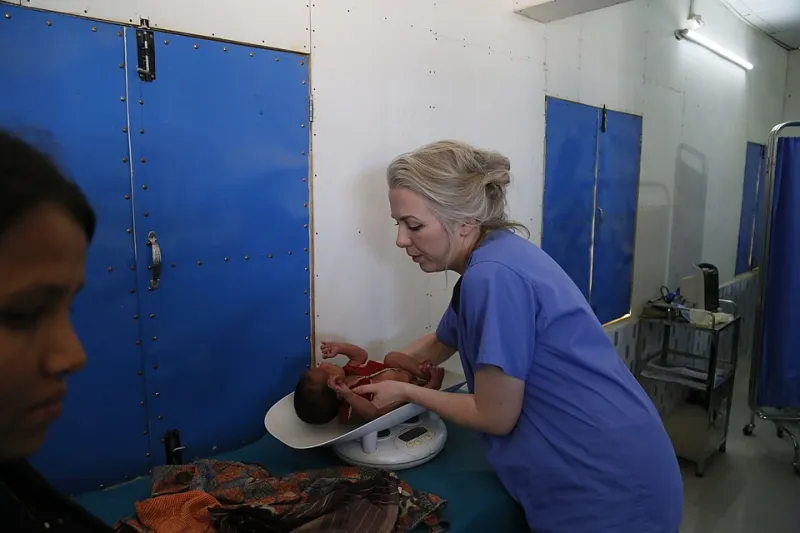
Weighed feeds are another classic panic trigger. They can be useful in some situations, but they are a snapshot, not a verdict on your worth as a parent. A baby who takes a small amount at one feed may take more at the next. If you are worried about weight, ask for a proper review rather than letting one number spiral in your head.
If feeding hurts, that is not a badge of honour. Ask for help with latch and positioning. Your local infant feeding team, health visitor or breastfeeding helpline can help. You are allowed to need support. You are also allowed to stop breastfeeding if it is not working for you and your baby. That is not failure. That is information.
Formula and combination feeding without the side-eye
Formula feeding is a safe, valid way to feed a baby. It is not a last resort. It is not a moral failing. If you are using formula, follow the NHS preparation guidance carefully: use cooled boiled water, follow the ratios on the tin, sterilise bottles and do not add extra powder or water. Those instructions are not fussy. They matter.
Responsive bottle feeding helps too. Hold your baby close, let them set the pace, and do not coax them to finish the bottle if they are turning away. Bottles are not a competition. They are a feed.
Combination feeding can work beautifully for some families and get complicated for others. If you are mixing breast and bottle, it is worth talking to your health visitor or an infant feeding specialist about supply, timing and what feels manageable. There is no single correct ratio. There is only what works for your family and keeps your baby growing and well.
Nappies, poo and the output truth
Nappy output is one of the most useful things you can notice. In the first few days, babies pass meconium, which is dark and sticky. Then the nappies change. Wet nappies usually increase, and poo turns yellow or mustardy if you are breastfeeding. Formula-fed poo can be a bit firmer and paler, which is normal.
As a rough guide, after the first week, many babies have at least six wet nappies in 24 hours. But babies are not machines. If your baby is suddenly having fewer wet nappies, is very sleepy, is not feeding well or looks unwell, get advice. Pale, chalky poo or blood in the nappy should be checked urgently. Black poo is normal in the meconium phase, but black poo later on is not something to ignore.
Growth charts are lines, not scores
Growth charts are one of the best ways to panic a perfectly reasonable parent. A centile is not a mark out of ten. It is a line on a chart. A small baby following their own curve is not failing. A big baby following their curve is not ‘overdoing it’. What matters is the pattern over time, alongside feeding, nappies and how your baby seems.
A baby crossing one centile can be normal, especially if they started big or small. A baby dropping across several centiles, or falling away from their curve, needs a review. That is not a reason to blame yourself. It is a reason to get another pair of eyes on the situation.
When to stop googling and get help
Get advice from your health visitor, GP, 111 or your local infant feeding team if:
- your baby is not feeding well, is very sleepy, or is hard to wake for feeds
- they have fewer wet nappies, a dry mouth, or a sunken soft spot
- they are vomiting green fluid, have blood in their nappy, or have pale poo
- they have a fever and are under three months old
- they are losing weight or falling away from their growth curve
- you feel something is wrong, even if you cannot explain why
Call 999 if your baby is struggling to breathe, blue or grey, floppy, unresponsive, having a seizure, or has a rash that does not fade under a glass.
The guilt bit
Here is the honest health visitor take: fed is the baseline, not the finish line. Breastfeeding, formula feeding and combination feeding all deserve support without a side order of shame. You are not a failure because you asked for help. You are not a better parent because you suffered in silence. You are a parent doing a hard job in a culture that loves to hand out medals for exhaustion.
So if you are sitting there wondering whether your baby is getting enough, start with the pattern: feeds, nappies, weight and alertness. Then speak to someone who can actually see you and your baby. You do not need to earn the right to ask. You just need to ask.