The 2026 Fridge-Door Baby Health Timeline: Checks, Jabs and When to Call for Help
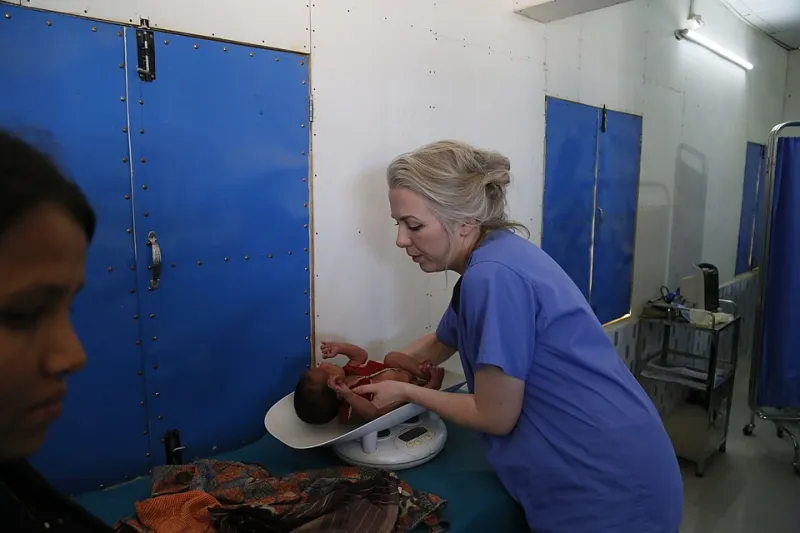
Photo: DFID - UK Department for International Development, CC BY 2.0, via Wikimedia Commons
If you have just come home with a newborn, you have probably been handed a red book, a stack of leaflets and about forty conflicting pieces of advice. The good news is that the UK baby health schedule is not a mystery. It is a fairly predictable rhythm of checks, jabs and conversations with your health visitor and GP. This is the simple version you can keep on the fridge door.
This is general guidance, not a substitute for your red book, your health visitor or NHS advice. Local schedules can vary slightly, especially in Wales, Scotland and Northern Ireland, so always follow the invitations you actually receive.
The first 72 hours: the newborn checks
Before you leave hospital, or within the first 72 hours, your baby should have a full newborn physical examination. This is a top-to-toe check that looks at the eyes, heart, hips, testes in boys, and general appearance. It is not a test you need to revise for. It is a chance to pick up anything that needs a closer look early.
Your baby will also be offered newborn hearing screening, usually before discharge or at a local clinic. The heel prick blood spot test normally happens around day five. Your midwife will arrange it, and it checks for a small number of rare but serious conditions. None of this is designed to frighten you. It is designed to catch the quiet things that are easier to manage early.
You will also be watched for jaundice, feeding and weight. If your baby is very sleepy, not feeding well or looks increasingly yellow, say so rather than waiting for the next appointment.
Days 5 to 14: midwife handover and the health visitor
Your midwife will visit in the early days to check you and your baby, talk about feeding and weigh your baby. Then your health visitor takes over the longer-term picture. In England, the first health visitor visit usually happens within the first 14 days, alongside an antenatal contact before birth. Your health visitor will look at feeding, weight, jaundice, the umbilical cord, safe sleep and how you are feeling.
This is also the point where the red book starts to earn its keep. Take it to every appointment. It is not a relic. It is the place where your baby's growth, checks and vaccinations are recorded, and it helps everyone sing from the same hymn sheet.
6 to 8 weeks: the GP check and the first jabs
At around six to eight weeks, your GP will do the newborn and postnatal check. This is a longer appointment than you might expect. They will check your baby's heart, hips, eyes, growth and development, and they will ask about feeding and your own recovery. It is a good time to raise anything that has been niggling you, even if it feels small.
At eight weeks, your baby is usually invited for the first vaccinations: the 6-in-1, rotavirus and MenB. Your GP surgery will send the invitation. If you are unsure what is due, ring the practice rather than relying on a half-remembered conversation at 3am.
12 weeks, 16 weeks and the first birthday
The 12-week appointment usually brings the second 6-in-1 and the pneumococcal vaccine. At 16 weeks, it is the third 6-in-1 and the second MenB. Around one year, your baby is usually invited for Hib/MenC, pneumococcal, the first MMR and the third MenB. After that come the pre-school boosters and the second MMR, but you do not need to memorise the whole schedule today.
The NHS vaccination schedule is updated from time to time, and local teams may also offer seasonal vaccines such as flu or RSV depending on age and risk. Your red book and GP invitations are the source of truth for your child.
The 2 to 2 and a half year review
Somewhere around two to two and a half, your health visitor will usually do a developmental review. This is a chat and a check of things like communication, movement, play and behaviour. It is not a school test. It is a chance to ask about speech, sleep, eating, toilet training and anything else that has been on your mind. If you have concerns about development, do not wait for the review if you are worried sooner.
The red flags: when to call 111 or 999
This is the bit to screenshot or stick on the fridge. Trust your instincts, but use the NHS as your backup.
Call 999 if your baby:
- is struggling to breathe, grunting, or has blue or grey lips
- has a seizure or fit
- is unresponsive, very floppy, or hard to wake
- has a rash that does not fade when you press a glass against it
- is seriously unwell and you feel something is very wrong
Call 111 or your GP urgently if your baby:
- is under three months old and has a temperature of 38C or higher
- is not feeding well, is feeding much less than usual, or has fewer wet nappies
- is vomiting green fluid
- has pale, blotchy or mottled skin
- is very sleepy, unusually unsettled, or has a high-pitched or weak cry
- has worsening jaundice, or jaundice that is still obvious after two weeks
- has blood in their nappy or pale, chalky poo
If you are not sure, call 111. You will not be wasting their time. That is literally what the service is for.
The reassurance bit
Most appointments are boring in the best possible way. Your baby is weighed, checked, jabbed, recorded and sent home. The system is not there to judge you. It is there to catch problems early and to reassure you when everything is fine. Keep the red book handy, go to the invitations you receive, and ask questions when something does not feel right. You do not need to know the whole schedule by heart. You just need to know where to look and when to pick up the phone.