Warm, Not Wrapped: A UK Parent’s Guide to Winter Layers in Prams and Car Seats
Winter in the UK rarely arrives as one neat, snowy scene. More often it is a grey drizzle at 8am, a biting wind on the walk home, and a car that takes ten minutes to warm up. For parents of babies, that means the daily question: how many layers is enough? The answer changes depending on whether you are popping to the school gate or heading out for a long weekend walk — and it changes again inside a car seat.
The one rule that covers most winter outings
Dress your baby in thin, flexible layers, then add or remove warmth as you go. Think vest, sleepsuit or leggings, a jumper or cardigan, and then an outer layer for the pram. The goal is not to make your baby as warm as you feel in a thick coat. Babies lose heat differently, and a pram or sling can act like an extra duvet.
A simple check is to feel your baby’s chest, back or the nape of their neck. It should feel warm, not hot or clammy. Hands and feet often feel cooler than the rest of the body, so they are not a reliable guide on their own. If the chest feels sweaty or your baby looks flushed and unsettled, take off a layer. If the back feels cool, add a thin one.
Car seats: the bulky coat problem
A thick padded coat or snowsuit can leave a gap between your baby and the harness. In a crash, that gap can allow the body to move further than it should. The safest approach is to take bulky outer layers off before strapping your baby in. Fasten the harness snugly against thin clothing, then add warmth over the top with a blanket tucked around the lap and over the harness — never underneath it.
Check the harness each time. You should not be able to pinch a loose fold of webbing at the shoulder. If your baby is wearing a hat, remove it once the car is warm. Never use a pram footmuff or a thick aftermarket insert in a car seat unless the car seat manufacturer specifically says it is approved for that seat. The same goes for rain covers: they are for prams, not car seats.
For short school-run trips, resist the urge to dress your baby for a polar expedition simply because the car is cold. A vest, babygrow, cardigan, hat and a blanket over the fastened harness is often plenty. You can add a pram layer when you get out. If you are waiting at the school gate in the wind, a thin fleece or an extra blanket is easier to remove than a snowsuit.
Prams and pushchairs: layers that can come off
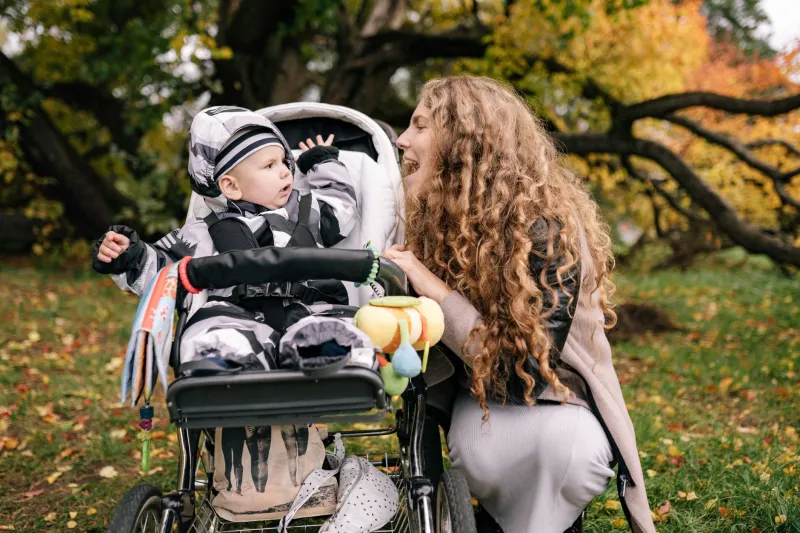
In a pram, your baby is usually more sheltered than you are. Start with the same thin base layers, add a pram suit or footmuff only if it is genuinely cold, and keep a blanket handy for the wind. A footmuff should not be so thick that your baby cannot move their arms and legs at all. If you are going into a shop, café or warm car, unzip the footmuff or remove the blanket before your baby gets overheated.
Rain covers are useful in a sudden downpour, but they can trap warmth. Use one that fits properly and has ventilation, keep an eye on your baby while it is on, and take it off as soon as you are indoors or under shelter. Never drape a blanket over the pram hood or across the opening to block the wind; that cuts down airflow and can make the pram too hot. A clip-on weather shield designed for your pram is a better choice than a makeshift cover.
Hats are helpful outside, but take them off indoors and in warm transport. Mittens can keep tiny hands comfortable, though many babies pull them off. Look for ones with a soft elastic cuff rather than anything tight. Bootees are fine for the pram, but check that they are not restricting movement.
Slings and baby carriers
A sling already adds a layer of warmth because your baby is close to your body. In cold weather, dress your baby in thin layers and use a carrier cover or your own coat’s extendable panel over the top. Avoid putting a thick coat or snowsuit on your baby between you and the sling; it can make them too hot and make the fit less secure. Check the sling’s safety guidance and make sure your baby’s face is visible and clear at all times.
If you are wearing a coat over both of you, be careful not to overheat your baby. Feel their chest or back regularly. On longer walks, it is easy to forget that your baby is getting warmer while you are focused on the pavement or the buggy wheels.
Short trips versus long walks
A ten-minute walk to nursery is not the same as a two-hour ramble. For short trips, keep it simple: base layers, a hat, a blanket or footmuff, and a rain cover if needed. You can always add a layer at the destination. For longer walks, take a spare blanket and be prepared to stop and check your baby’s temperature. If you are going in and out of warm buildings, choose layers you can remove quickly rather than one all-in-one suit that has to come off entirely.
Early darkness is part of the UK winter picture too. Add reflective clips to the pram, wear something visible, and keep a small torch or your phone charged. Avoid covering the pram opening with a dark blanket to keep the wind out; it makes it harder to see your baby and reduces airflow.
When to ring for help
Overheating can make a baby drowsy, flushed and sweaty. If your baby feels very hot, is breathing quickly, is difficult to wake or seems unwell, remove extra layers, offer a feed if they are due, and seek medical advice. The NHS 111 service or your GP can help if you are worried. In an emergency, call 999.
Winter outings are manageable when you think in thin layers rather than one big coat. Check the chest and back, keep the car seat harness snug, and treat rain covers and footmuffs as tools to use with care. Warm and safe beats bundled and boiling every time.