Small Spoons, Steady Nerves: Introducing Allergens Without the Drama
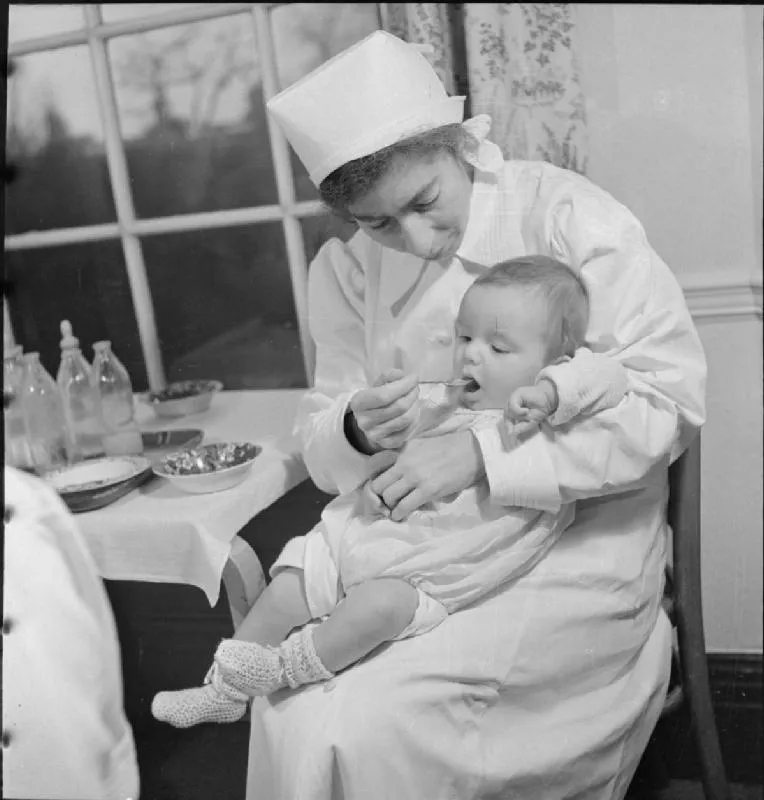
Photo: Ministry of Information Photo Division Photographer, Public domain, via Wikimedia Commons
Starting solids is messy enough without turning a teaspoon of peanut butter into a melodrama. But common allergens do deserve a plan. The good news: for most babies, introducing them is a calm, ordinary part of weaning — small tastes, a watchful eye and a bit of patience. This guide is practical information, not a diagnosis. If your baby has severe eczema or an existing food allergy, stop and speak to your GP or health visitor before you start.
Why allergens get their own chapter
Peanut, egg, cow's milk, wheat, fish, shellfish, sesame, soy and tree nuts are the usual suspects. Current UK advice is to introduce them from around six months, when your baby is ready for solids, and not before four months. Delaying them does not prevent allergy. In fact, for peanut and egg, introducing them alongside other first foods is now encouraged. The one big exception is babies at higher risk, who need a conversation with a clinician first.
First, which group is your baby in?
Lower-risk babies have no eczema, or only mild patches, no known food allergy and no previous immediate reaction to food. Higher-risk babies have severe eczema — the sort that needs regular steroid cream or flares often — a diagnosed food allergy, or a previous immediate reaction such as hives, swelling or breathing problems after eating. If that is your baby, ask your GP or health visitor about allergy assessment before you offer peanut or egg at home. Do not run a DIY taste test with a big spoon. A strong family history of allergy is worth mentioning too, though it does not automatically put your baby in the higher-risk group.
The ground rules that make it easier
Offer new allergens when your baby is well and not mid-cold, and when you can give them your full attention for a couple of hours. Morning or lunchtime is better than bedtime. Stay at home — not a restaurant, car or nursery. Start with one allergen at a time and a small amount. A common approach is to leave a few days between new allergens so you know what caused what. Once a food is tolerated, keep offering it regularly, around once or twice a week, so tolerance has a chance to stick. Avoid whole nuts under five, honey under 12 months, and cow's milk as a main drink before 12 months — though pasteurised dairy in foods is fine.
What a first taste actually looks like
| Allergen | First taste | Serve it like this |
|---|---|---|
| Peanut | 1/4 teaspoon | Smooth peanut butter thinned with your baby's usual milk or water, stirred into porridge |
| Egg | 1/4 teaspoon | Well-cooked mashed egg — never raw or runny |
| Dairy | 1 teaspoon | Plain full-fat pasteurised yoghurt |
| Wheat | 1/2 teaspoon | Wheat-based baby cereal, or a soft toast finger if your baby is ready |
| Fish | 1/2 teaspoon | Boneless, flaked cooked fish such as salmon |
| Sesame | 1/4 teaspoon | Smooth tahini thinned with milk or water, mixed into a puree |
Keep textures safe: no whole nuts, no chunks of peanut butter, no hard raw apple and no spoonfuls of tahini straight from the jar.
Your simple first-tastes planner
This is a template for a lower-risk baby who has already started basic solids and has had the all-clear from your health visitor. Adjust it to your baby. The key is not the exact day — it is the one-at-a-time approach.
| Day | Taste | Amount | Watch for |
|---|---|---|---|
| 1 | Peanut | 1/4 teaspoon thinned in porridge | Rash, swelling, vomiting, breathing changes |
| 2 | Peanut again | Same small amount | Same |
| 3 | Peanut again | Same | Same |
| 4 | Egg | 1/4 teaspoon well-cooked mashed egg | Same |
| 5 | Egg again | Same | Same |
| 6 | Egg again | Same | Same |
| 7 | Dairy | 1 teaspoon plain full-fat yoghurt | Same |
| 8 | Dairy again | Same | Same |
| 9 | Dairy again | Same | Same |
Carry on with wheat, fish and sesame in the same pattern. If your baby refuses a food, do not force it. Try again another day, and mention it at your next review.
What a reaction can look like
Most reactions happen within minutes to two hours. Mild to moderate signs include hives, an itchy red rash, swelling around the lips or eyes, vomiting, tummy pain, a runny nose, sneezing or itchy eyes. Stop offering the food, keep your baby with you and take a photo of any rash. If your baby is otherwise well, ring 111 or your GP for advice on what to do next.
Severe signs are a different call. Swelling of the tongue or throat, a hoarse cry, difficulty breathing, wheeze, a persistent cough, pale or floppy behaviour, sudden collapse or widespread hives alongside breathing problems need 999. If your baby has been prescribed an adrenaline auto-injector, use it and call 999. Do not wait to see if it settles.
111 or 999?
Use 111 for advice if your baby has a mild reaction and is otherwise well, or if you are unsure whether to worry. Use 999 for breathing difficulty, throat swelling, collapse or any sign of anaphylaxis. If in doubt and your baby is struggling to breathe, choose 999.
Questions worth asking your health visitor or GP
- Is my baby higher risk because of eczema or an existing allergy?
- Do we need a referral or allergy assessment before peanut or egg?
- How much is a sensible first portion for my baby?
- Which symptoms should make us stop and seek help?
- What should we do if our baby refuses the food?
- Can we keep breastfeeding while introducing allergens?
- How often should we keep offering a food once it is tolerated?
The takeaway
Allergens are food, not fireworks. Introduce them one at a time, in small amounts, when your baby is well and you are not rushed. Keep offering the ones that are tolerated. And if your baby has severe eczema or an existing allergy, get personalised advice first — that is not a delay, it is a plan. At Baby Matters, we are not fans of fear-led weaning. A small spoon, a steady nerve and a phone nearby is a sensible way to start.